written and sung by Jim Low Recorded with Chloe and Jason Roweth
When I was a child walking down the street I’d see this strange word written, written at my feet Eternity was what it read, I asked my Dad just what it said And it meant forever, and ever and ever Always, always Continue reading “Mr Eternity”
Many of the Jenolan visitors who begin their caves walking excursion from the overflow carpark will pause to admire the majestic Carlotta Arch and the view through it to the Blue Lake, far below.
Carlotta Adams was the daughter of PF Adams who surveyed the Devil’s Coachhouse, another spectacular open cave. The sides of this natural arch contain hints of the abundance of “stalactite” formations the visitor can expect on a guided cave tour.
The unique blue of the lake, so often framed by Carlotta Arch in photographs, is caused by the dissolution of limestone in the chilly waters flowing through some of the underground caves. In recent years, a platypus family has been noticed residing in the lake.
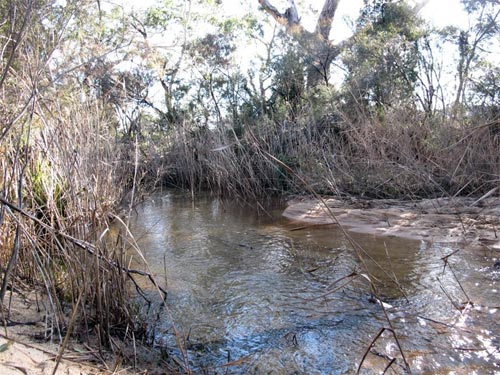
The River Lett received its name when someone reading the 1814 survey notes made by Surveyor George W Evans did not pick up that he’d intended to write the word “rivulet”. It is a relatively short waterway with an eclectic series of landscapes along its course.
A few hundred metres downstream, the waterway filters lazily through a bed of reeds along the boundary of the Londonderry Reserve. Nearby is a property owned by the children of a woman who kept emus raised from chicks brought from Cobar.
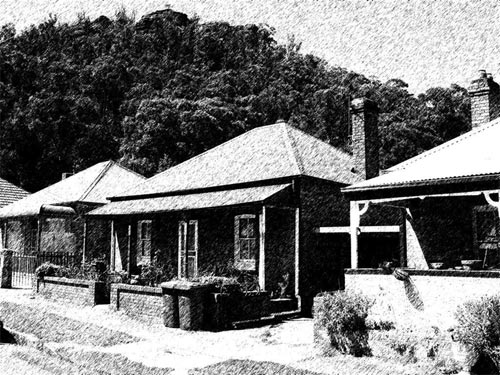
Richard Inch and his brother converted Mort’s old meatworks to the Blue Mountains Brewery during the years 1902 to 1904. The pockets of development around Lithgow contain a number of distinctive styles of housing which were largely occupied by manual workers engaged in the various industrial and mining enterprises which have defined Lithgow’s history. Few are as picturesque as the brick and stone cottages in Bragg and Brisbane Streets, near the brewery in Oakey Park.
Oakey Park houses framed by pagoda studded ridges (Christine Davies)
They are mainly single storey, with an occasional upper storey. A few have original looking verandahs. The size of the windows and the thickness of the walls attest to the severity of the winters. Elaborate and ornate chimneys survive on some of the cottages. The numerous watercourses through the subdivision have never been piped and the riparian vegetation and old wooden foot bridges are a feature of the area.
Contributing to the visual spectacle are the rings of hills, cliff-faces and pagodas surrounding the elongated Lithgow basin. It is hidden treasures like this which make Lithgow a photographer’s paradise.